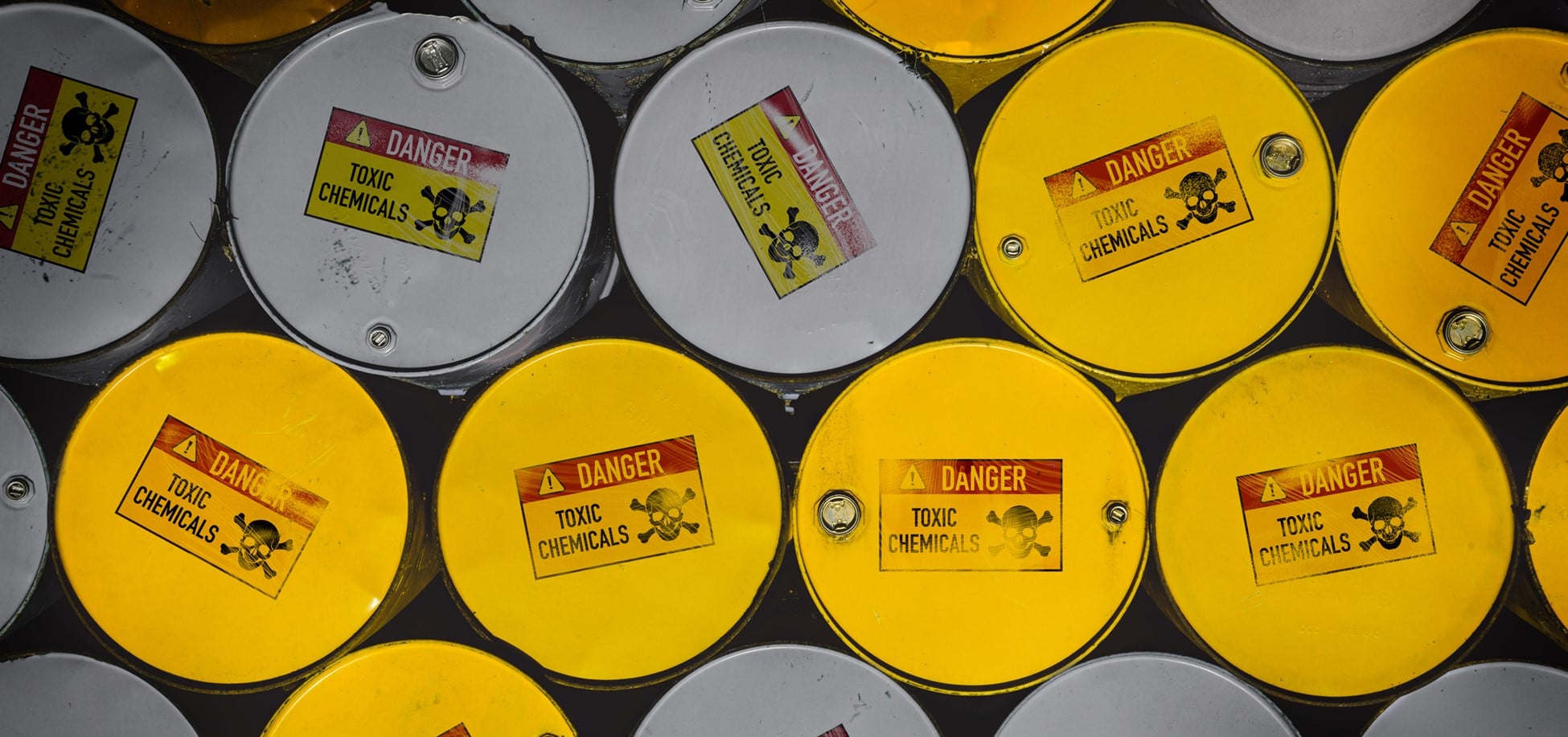
A dealership makes regulated waste in almost every department: used oil and filters in the service lane, solvents in the parts washer, paint waste and booth filters in the body shop, and batteries everywhere. Most shops have never formally worked out which of it counts as hazardous, or what their generator status is. That status decides almost every rule that applies to them.
This guide walks through the automotive waste streams, how generator status changes the rules, storage and labeling, RCRA training, and the records an inspector will ask for. Hazardous waste disposal is one piece of auto dealership compliance management, and it's the piece most likely to cost you if the drum in the back isn't what the label says.
What Counts as Hazardous Waste at a Dealership?
Under RCRA, a waste is hazardous if EPA lists it or if it's ignitable, corrosive, reactive, or toxic. Classification can also depend on your state and on whether the material is recycled, so treat this table as typical, not absolute.
|
Waste Stream
|
Where It Comes From
|
Typically Regulated As
|
Common Mistake
|
|
Used oil
|
Oil changes, drained fluids
|
Used oil (40 CFR 279) when recycled
|
Adding solvent or brake cleaner to the drum
|
|
Oil filters
|
Oil changes
|
Exempt if hot-drained and not terne-plated
|
Tossing filters in the trash without draining
|
|
Spent solvent and parts-washer fluid
|
Parts washers, degreasing
|
Often hazardous waste (ignitable, toxic, or listed)
|
Pouring it into the used oil
|
|
Antifreeze
|
Coolant service
|
Often not hazardous; may be if contaminated; recycled in many states
|
Mixing it with oil or solvent
|
|
Lead-acid batteries
|
Battery replacement
|
Universal waste or recycled
|
Storing cracked batteries with no containment
|
|
Lithium-ion batteries
|
Hybrids, EVs, tools
|
Often hazardous; usually manageable as universal waste
|
Storing damaged packs with other waste
|
|
Brake cleaner and aerosols
|
Service bays, detail
|
Universal waste (aerosols) in most states
|
Treating partly full cans as trash
|
|
Paint waste and gun wash
|
Paint mixing, spray guns
|
Often hazardous (ignitable, listed solvents)
|
Leaving containers open in the booth
|
|
Spray booth filters
|
Paint booths
|
May be hazardous, depending on paint chemistry
|
Disposing of filters without a waste determination
|
|
Shop rags and wipes
|
Every department
|
May qualify for the solvent-contaminated wipes exclusion
|
Tossing solvent-soaked rags in the trash
|
|
Mercury switches and lamps
|
Older vehicles, shop lighting
|
Universal waste
|
Breaking lamps or switches during removal
|
|
Airbag modules
|
Recalls, collision repair
|
Reactive hazardous waste unless the airbag waste exemption applies
|
Shipping them with general scrap
|
Collision centers carry the heaviest load of these streams. See our overview of body shop regulations.
Used Oil and Oil Filters
Used oil isn't regulated as hazardous waste when it's recycled. It falls under EPA's separate used oil rules. Keep it in containers in good condition labeled "Used Oil," clean up leaks, and send it out with a transporter that has an EPA ID number. Shops can also burn their own used oil, and oil from do-it-yourself customers, in an on-site space heater that meets EPA's size and venting limits.
The rule that matters most is to keep it clean. Used oil with more than 1,000 ppm of total halogens is presumed to be mixed with hazardous waste, and chlorinated brake cleaner is the usual culprit. One bad pour can turn the whole drum into hazardous waste. Oil filters are exempt if they're hot-drained, typically for at least 12 hours, and aren't terne-plated. Recycle the drained filters as scrap metal.
Solvents, Paint Waste and Booth Filters
Spent parts-washer solvent, paint thinners, and gun wash are usually hazardous because they're ignitable, and many are also listed spent solvents. Booth filters depend on what's in the paint, so they need a waste determination, sometimes with lab testing. Solvent-soaked rags can qualify for a federal exclusion if they're kept in closed, labeled containers and sent to a laundry or a qualifying disposal facility, but states vary.
Generator Status: The Thing That Decides Your Rules
Your generator status is based on how much hazardous waste a site generates in a calendar month, not on what kind of business you are. A dealership and an oil change shop follow the same thresholds.
|
Generator Class
|
Monthly Threshold
|
Accumulation Limit
|
Training Required
|
Manifest Required
|
|
VSQG
|
100 kg or less
|
No time limit; never more than 1,000 kg on site
|
No federal requirement
|
No federal requirement
|
|
SQG
|
More than 100 kg, less than 1,000 kg
|
180 days (270 if disposal is 200+ miles away); 6,000 kg max
|
Employees familiar with handling and emergency procedures
|
Yes
|
|
LQG
|
1,000 kg or more
|
90 days
|
Formal program, annual review, written records
|
Yes
|
Small and large quantity generators also need an EPA ID number, and the higher tiers add weekly inspections, emergency planning, and, for LQGs, a written contingency plan and biennial reporting. Used oil and universal waste managed under their own rules generally don't count toward the monthly total.
Status is counted per site, and it can change month to month. A collision center with a busy paint operation often sits in a higher tier than the service department down the street, and a big booth cleanout can bump a site up for that month. States authorized to run their own RCRA programs can set stricter rules than these federal baselines, so confirm yours.
Storage, Labeling and Accumulation Time
Most shop citations happen at the satellite accumulation area: the container at or near where waste is made, like the drum beside the parts washer or the can in the paint mixing room. You can keep up to 55 gallons there under the control of the people using it. Once you go over, date the excess and move it to your central accumulation area within three consecutive days.
Every hazardous waste container needs to be in good condition, compatible with what's in it, and closed except when someone is adding waste. Each one must be labeled "Hazardous Waste" with an indication of the hazard, such as ignitable or toxic, and containers in the central area also need the date accumulation started. Secondary containment, like a spill pallet under liquid drums, isn't required for every generator, but it's cheap insurance. Knowing what comes in makes it easier to manage what goes out, so start with chemical inventory management.
A walkthrough you can run this week:
- Find every container of waste in the building, including the ones nobody claims.
- Check that each one is closed, labeled, and in good condition.
- Check for start dates in the central area and count the days against your limit.
- Look in the used oil drum for anything that isn't oil.
- Confirm someone knows your generator status and where the manifests are.
Who Needs Hazardous Waste Training and How Often
Employees at large and small quantity generators who handle hazardous waste need RCRA training, and the depth depends on the generator tier.
At an LQG, training has to be a formal program, either classroom or on the job, taught by someone trained in hazardous waste management. It covers the employee's specific duties, emergency procedures, and response equipment. New employees must complete it within six months of starting the job, everyone gets an annual review, and the employer keeps written job titles, job descriptions, training descriptions, and completion records. At an SQG, employees must be thoroughly familiar with proper waste handling and emergency procedures for their jobs. VSQGs have no federal training requirement, though states may add one.
Anyone who signs a hazardous waste manifest also needs DOT hazardous materials training, refreshed at least every three years.
RCRA training isn't the same as OSHA's HAZWOPER. HAZWOPER covers cleanup at hazardous waste sites, treatment and disposal facilities, and emergency response to releases. Most shop employees don't need it, unless they're expected to respond to a significant spill rather than evacuate and call for help. KPA's safety and compliance training covers the RCRA side for every role.
Manifests, Records and What an Inspector Asks For
SQGs and LQGs ship hazardous waste on the Uniform Hazardous Waste Manifest, which travels with the waste to the disposal facility. A trained employee signs it as the generator. The facility sends back a signed copy, and if it doesn't arrive on time, you have to follow up and report it. Keep manifests and related records for at least three years. EPA has proposed phasing out paper manifests in favor of its electronic e-Manifest system.
What an inspector typically asks to see:
- Your EPA ID number and generator status
- Waste determinations for each stream
- Manifests with signed return copies
- Weekly inspection logs for the central accumulation area
- Training records
- Used oil and universal waste handling
- Emergency information posted near the phone
If you can't produce one of those in a few minutes, that's your starting point. On-site safety consulting can run a mock inspection before the real one.
Hazard Communication and OSHA's Top 10
Hazard Communication ranks second on OSHA's preliminary FY 2026 Top 10 most-cited standards list, which covers October 1, 2025 through August 31, 2026. It touches every chemical a shop stores, which makes it the natural partner to waste compliance. Respiratory Protection ranks sixth, which matters for anyone spraying paint.
The distinction readers mix up: HazCom governs the chemicals you use, and RCRA governs the waste they become. See KPA's guide to OSHA’s Top 10 most cited standards and our guide to hazard communication requirements.
Managing Waste Compliance Across Multiple Locations
A dealer group with stores in three states can have three sets of waste rules, different generator statuses at each rooftop, and one compliance lead who has to produce the records for any of them on demand. KPA helps by keeping waste records, inspections, and training in one place, with consultants who walk the shops and training that reaches every technician and painter. See our EHS solutions for dealerships.
So the next time someone asks which drum is which, the answer is on the label and in the file.
Hazardous Waste Disposal FAQs
Is used oil considered hazardous waste?
Not when it's recycled. Used oil is managed under its own EPA rules in 40 CFR Part 279. If it's mixed with hazardous waste, like chlorinated solvent, it can become hazardous waste and lose that simpler path.
How long can a shop store hazardous waste on site?
It depends on generator status. Federally, LQGs have 90 days, SQGs have 180 days (270 if the disposal facility is more than 200 miles away), and VSQGs have no time limit but can't hold more than 1,000 kg. States may be stricter.
Do auto repair shops need an EPA ID number?
Yes, if the shop is a small or large quantity generator. Very small quantity generators don't need one federally, but many states require one anyway.
Who needs RCRA hazardous waste training?
Employees who handle hazardous waste at large and small quantity generators. LQGs need a formal program with an annual review and written records. SQGs need employees familiar with handling and emergency procedures.
What is the difference between RCRA training and HAZWOPER?
RCRA training covers how employees handle the hazardous waste a business generates. HAZWOPER is an OSHA standard for cleanup sites, waste facilities, and emergency response to releases. Most shop employees need RCRA training, not HAZWOPER.
Can a dealership throw away empty aerosol cans?
Generally yes, if the can is truly empty of both product and propellant, though recycling it as scrap metal is better. Cans that aren't empty should be managed as universal waste or hazardous waste. Some states have stricter rules.