
The transition from paper-based to digital safety management represents one of the most significant opportunities—and challenges—facing EHS professionals today. It’s a journey that promises greater efficiency, better data insights, and improved safety outcomes, but it’s also one filled with potential pitfalls and unexpected hurdles.

Recently, we asked our customers in KPA Connect—our customer community—about their experiences transitioning from manual to digital safety management. Their biggest ‘aha moments’ and the unexpected challenges they faced provide valuable insights for any organization considering this transformation. Throughout this article, we’ll share their real-world experiences to help guide your journey.
The reality of manual safety management is all too familiar: lost inspection forms, delayed incident reporting, and hours of manual data entry.
My biggest “aha moment” was realizing how digital safety management creates real-time visibility and accountability, turning safety from a reactive process into a proactive culture.
– Gennesis Rosas, Electrical and Instrumentation Designer, Phase 3 Energy and Power Solutions
My “aha moment” being able to see data in real time vs having to manually transfer from paper to excel sheet to get data.
– Benjamin Rumery, Corporate Field Safety Coordinator, AMI Metals
The difference between organizations that successfully transform their safety programs and those that don’t isn’t just about buying software—it’s about building a foundation for transformation.
The truth is, purchasing EHS technology doesn’t automatically create a safer workplace. As Nick Hardesty, Director of EHS Field Services at KPA, explains: “Technology within the EHS world has changed immensely. But building a true safety culture isn’t just about rules or checklists—it’s about a mindset.”
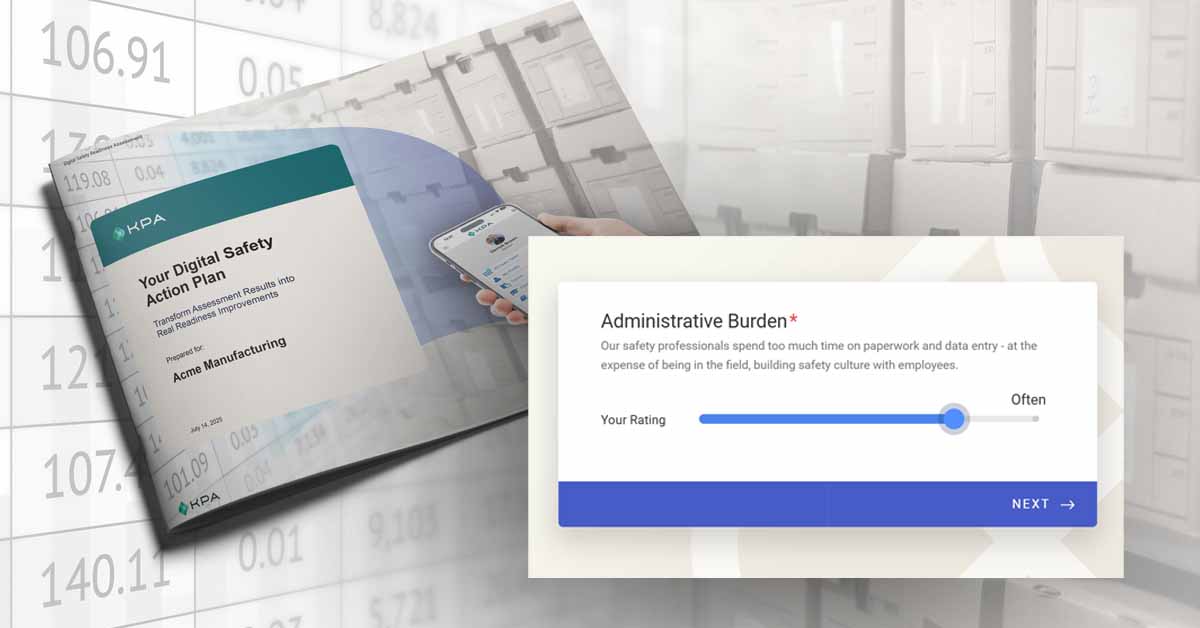
Digital Safety Readiness Assessment
Take KPA’s free 5-minute assessment to see if you’re ready for digital safety management. Get your readiness score & personalized action plan.
The Foundation Matters
Technology alone doesn’t create transformation—people do. While EHS software can streamline processes and provide valuable data, the human element determines whether digital initiatives succeed or fail. Many organizations struggle not because of technology limitations, but due to organizational readiness issues.
Common reasons why EHS technology implementations fail include:
- Leadership viewing safety technology as just another expense
- Employees resistant to changing familiar paper-based processes
- Poor data quality undermining trust in the new system
- Inadequate training leading to underutilization
- Trying to digitize inconsistent, chaotic processes
- Lack of basic technology infrastructure in the field
Six Essential Building Blocks for Success
Going Digital – Implementation Best Practices
Successful digital transformation doesn’t happen overnight. Start small with pilot programs focusing on “low-hanging fruit” for quick wins.
Best practices include:
- Start with high-impact, easy wins like safety observations or toolbox talks
- Celebrate early successes to build momentum and enthusiasm
- Scale gradually with lessons learned from pilot programs
- Focus on engagement rather than just compliance
- Measure and communicate ROI to maintain support
Here’s one unexpected challenge:
The volume of data that we started to receive was mind-blowing. We are unable to process and respond to the amount of safety concerns and near misses turned in because of the high adoption rate.
– David Finley, HSE Director, Dolese | Read the Dolese Case Study
This is a great problem to have, but organizations should be prepared for the increased engagement that digital tools can bring.
Your Foundation for Sustainable Transformation
Building a digital safety foundation isn’t about implementing technology—it’s about creating sustainable transformation. When you have the right building blocks in place, technology becomes a powerful enabler of your safety culture rather than just another system to manage.
The ability to quickly and accurately mine through the data for stats or even specific incidents was a game changer.
– Chris Gafford, EHS Manager, Ring Energy
The organizations that succeed in digital safety transformation are those that recognize it’s a journey requiring commitment, planning, and the right foundation. They understand that investing in these building blocks creates lasting change that protects workers, reduces costs, and drives continuous improvement.
KPA brings over 35 years of experience helping 15,000+ organizations successfully transition from paper-based to digital safety management. Our unique combination addresses every building block:
- Flexible platform that adapts to your standardized processes
- Comprehensive training library with 400+ courses for ongoing education
- Mobile-first design ensuring field workers can access everything they need
- Implementation support at every stage, from data migration to user adoption
Ready to Build Your Digital Safety Foundation?

Discover where you’re strong, identify gaps, and get actionable steps to ensure your EHS technology implementation succeeds.
Related Content
Explore more comprehensive articles, specialized guides, and insightful interviews selected, offering fresh insights, data-driven analysis, and expert perspectives.