KPA – Complete, Continuous Compliance for All Automotive Industries

KPA – Complete, Continuous Compliance for All Automotive Industries

KPA's blog covers the compliance topics that matter most to automotive businesses, from OSHA updates and FTC enforcement to HR best practices and cybersecurity requirements.
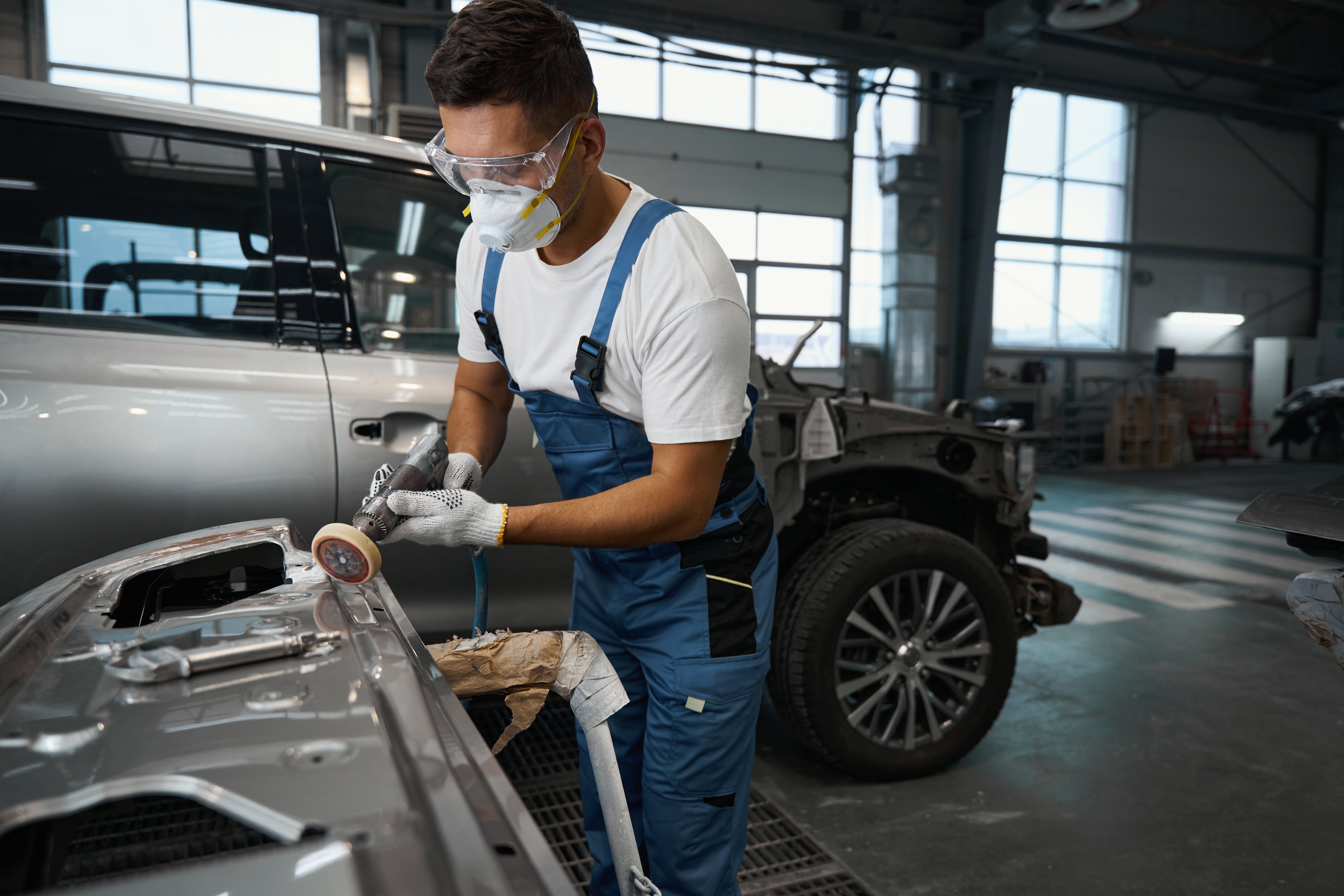
Most paint shops I walk into have respirators. Fewer have a respiratory protection program. You can't see the difference from the doorway, but your painters breathe it every shift, and OSHA notices it more than almost anything else in our industry.
Volatile organic compounds (VOCs) are chemicals that evaporate at room temperature. That's the point of them in a paint operation. Base coat, primer and top coat all need something to evaporate off so the finish can harden on the vehicle, and what evaporates goes straight into the painter's breathing zone.
In the short term, too much exposure means dizziness and central nervous system effects. Picture a painter in the mixing room cleaning out a spray gun with no respirator and poor ventilation. All that thinner is evaporating right into their face, and they can pass out where they stand.
The long-term risk is quieter. A painter who skips the respirator on quick jobs, or wears one that isn't doing its job, takes in a little more every year. Ten or fifteen years later, their in a doctor's office hearing about a respiratory or nervous system problem that traces back to the booth.
I was at the National Safety Congress this fall, where OSHA presented its most cited violations for fiscal year 2025. Respiratory protection was number six across all industries. Automotive repair ranked number two among the industries cited for it.
The presenter closed with a point I've been making to shops for years: you have to do air monitoring. Don't assume you know what's in the air or how much of it. Measuring it is step one.
Air monitoring is simpler than most managers expect. We clip two small badges to the painter's collar, close to where she/he breathes, and they wear them for about eight hours. We want a normal day. Mixing, spraying, gun cleaning, the usual ventilation. Then the badges go to a lab, which measures eight different VOCs, and we compare the results against OSHA's exposure limits.
Sometimes the results surprise everyone. One shop came back with the highest acetone reading I'd seen. When I called the collision manager, we found two reasons in about five minutes. Their gun washer was not capped and vented into the mixing room instead of outside the mixing room, and painters were also cleaning guns by hand with solvent and a brush. Cap the gun washer so the vapors remain in the machine during the cleaning process, stop the manual cleaning, and that exposure drops. No new respirator required.
If you use half-mask respirators with organic vapor cartridges, how do you decide when to change them? A lot of shops say every month, because that's what the paint supplier suggested. That isn't data, and OSHA expects your written program to show objective data behind the change-out schedule.
The calculators from OSHA, NIOSH and respirator manufacturers all need one input you can't guess: the actual concentrations in your shop. The answer could be every 30 hours, every 40, or every 100. Humidity, booth ventilation, outside temperature and how hard your painters are working all change it.
One shop's results were low enough that the math said 700 hours. I'd never hold a cartridge that long. They break down over time no matter what the calculator says.
A note on powered air-purifying respirators (PAPRs), because there's a myth out there. A PAPR isn't a fresh air system just because it has a hood and a hose. The motor on the belt pulls shop air through a filter constantly, so those cartridges often saturate faster than a half mask's, not slower. A PAPR still needs a change-out schedule. Only a true supplied-air system, with a line feeding clean air from outside the contaminated area, takes the cartridge question off the table.
Once monitoring shows you need respirators, the regulation lays out the rest:
On my first-ever site visit, a painter in the mixing room turned around wearing a respirator with a hole drilled through the mouthpiece and a lit cigarette sticking out of it. He'd been doing the job his way for a long time and nobody had stopped him. That's what a program is for.
I once talked with a collision manager who became sensitized to paint chemicals after years of exposure. Now he has an asthma like attack if he goes near the mixing room or the booth. He's spent years in and out of doctors' offices, and sensitization doesn't go away. If that's ruled work-related, it's a workers' comp claim that can follow your operation for the rest of that employee's life.
We covered all of this and more in our recent KPA Compliance Weekly on LinkedIn Live. Watch the on-demand session here.

2569 Park Lane
Suite 108
Lafayette, CO 80026


© 2026 KPA | All Rights Reserved | Privacy Policy | Consent Preferences

.png)